CUET 2026 is a key entrance exam for students seeking undergraduate programs at central and participating universities in India. Conducted by the National Testing Agency (NTA), this exam is a common gateway for admission to many courses across 230 participating institutions.
This guide gives important information students need to plan clearly for the CUET 2026 exam. It covers eligibility, syllabus, exam pattern, application steps, preparation tips, and more.
The Common University Entrance Test (CUET) is a national-level exam conducted annually by the National Testing Agency (NTA). Its primary purpose is to provide a single-window opportunity for students seeking admission to undergraduate programs across various participating institutions. CUET ensures a fair and transparent selection process based on merit rather than board marks alone.
All 48 central universities, including Delhi University and BHU, use these scores as their primary admission criterion. The exam is held in Computer-Based Test (CBT) mode and evaluates candidates on language proficiency, domain-specific subjects, and general mental ability. So, understanding the CUET exam pattern, syllabus, and preparation strategy early is important for securing a good score.
Here are the key CUET 2026 updates at a glance:
Candidates should carefully read the CUET eligibility criteria 2026 before filling out the form.
NTA has not set an upper age limit for candidates who want to appear in the CUET UG 2026 exam. But the universities that are taking part may have their own age-related rules for certain programs. Students should always check the requirements for the university and course they want to apply to.
The general requirement is that the student should have passed 10+2 with a minimum of 50%. But the exact requirements may differ from course to course and school to school.
Students also need to be aware of eligibility requirements for each subject. Some universities might want to have certain Class 12 subjects to get into certain programs.
The CUET application form 2026 will be available through the official NTA website. Students should complete the process carefully and verify all details before final submission.
Keep the following documents ready before starting the application:
The application fee for up to 3 subjects is:
Students can download the CUET 2026 admit card by following these steps:
Only those candidates who complete the application form successfully will be able to download the admit card.
Understanding the CUET exam pattern 2026 is the first step toward focused preparation. The exam includes language papers, domain-specific subjects, and a general test. Knowing the section-wise structure helps students decide how to prepare and where to practise more.
The exam is divided into three major parts:
The paper includes around 150 questions overall, depending on the subjects selected by the student. The exact combination may vary based on the course and university requirements.
Because of negative marking, students should focus on both accuracy and speed.
The CUET syllabus 2026 is divided according to the three main sections of the exam. Students should choose subjects based on their planned course. They should also check the entry requirements of their chosen universities.
The language section mainly tests:
The domain-specific section is based on the CBSE Class 12th syllabus. Students should select domain subjects that match the eligibility criteria of their preferred course and university.
The General Test includes:
The domain subject list includes:
A smart preparation strategy can make a major difference in CUET performance. Students should aim for consistency, revision, and timed practice rather than only covering theory.
Start by dividing the syllabus into weekly targets. Give more time to difficult subjects, but do not ignore stronger areas completely.
CUET preparation tips are as follows:
Students should also make short notes for formulas, definitions, and important facts to speed up revision later.
Time management is essential because CUET is a timed exam. Each paper is 60 minutes for 50 questions, which means just over a minute per question. Speed and accuracy under pressure must be practised, not assumed.
Students should practise solving questions within actual exam conditions to build this skill. A few practical ways to manage time effectively:
Mock tests and previous year papers help students understand the exam level, question types, and time pressure. They also show where improvement is needed.
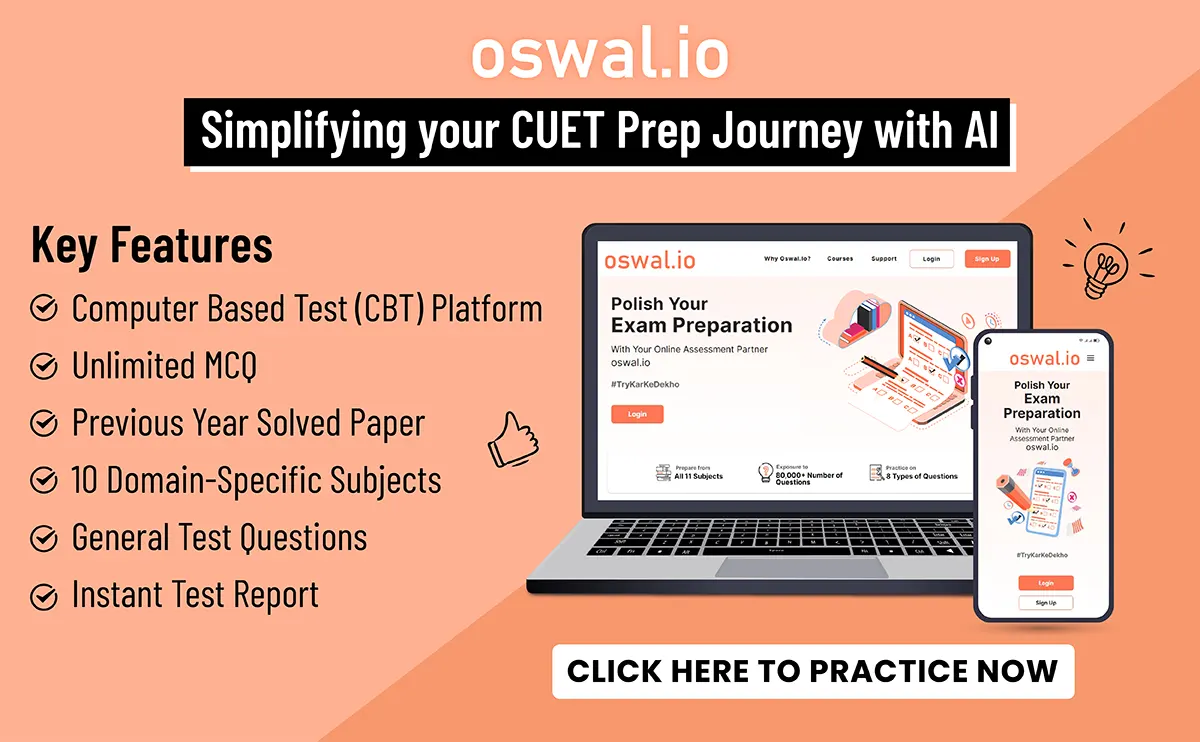
Students can strengthen their preparation by taking subject-wise CUET mock tests in areas such as:
CUET scores are accepted by central universities as well as several state, deemed, and private universities. The exact list may vary by year, and course-level participation can differ across institutions.
Some representative universities in India accepting CUET scores include:
Students should not rely only on the broad university list. They must check each university’s latest admission brochure. It will confirm if their chosen course accepts CUET scores. It will also list any subject-specific requirements.
The key CUET exam date 2026 details are given below:
Students should treat tentative dates carefully and track official announcements for confirmation.
Once the exam is over, the next stage is checking results, understanding cut-offs, and participating in counselling or admission rounds.
To check the CUET result:
Cut-offs are the minimum scores or ranks required for admission to a particular course at a particular university. They are not set by NTA — each university determines its own cut-off based on available seats, total applicants, and that year’s paper difficulty. Meeting the cut-off does not guarantee admission, as reservation policies, seat availability, and document verification also factor in.
After the result is declared, students should:
Students should be careful at this stage because missing a deadline can affect admission chances.


 CBSE
CBSE Important Questions
 Class 10
 Maths
Maths Science
 Social Science
 English
 Biology
 Physics
 Chemistry
 Computer Applications
 History & Civics
 Geography
 Business Studies
 Economics
 Accountancy
 Political Science
 General Test